coaching practice
drop or drive
Feedback Form
Thank you for taking the time to help me gather evidence for my Level 1 Club Coach Award with Pickleball Scotland.I'd be really grateful if you could take a couple of minutes to provide some feedback - please be honest, it helps me provide better coaching and develop.
Session Notes
The third shot is the serving team's shot after the return. It matters because we start the point at a disadvantage - we're stuck back near the baseline while our opponents are already up at the kitchen line. The job of the third shot is to get us out of that disadvantage and earn our way up to the line.Main aims of a third shot:- get ourselves moving forward towards the kitchen
- neutralise our opponents' positional advantage, or
apply enough pressure to force a weak reply we can attackWe have two main tools for this - the drop and the drive.The third shot dropA drop is a soft shot that arcs up and lands in the kitchen, ideally low and dropping so it can't be attacked. The aim isn't to win the point, it's to buy ourselves time to move up to the line.We talked about the need to:- have a soft grip
- swing low-to-high and lift the ball with our legs, not just our arm
make contact out in front of our body
- be balanced, with our body behind the ball
- aim for a gentle, controlled lift rather than a big swing - we're trying to do less, not moreThe third shot driveA drive is a hard, flatter shot aimed at our opponents' feet or body. The aim is to apply pressure and force a pop-up or a weak return that we (or our partner) can put away on the next ball.We talked about the need to:- stay compact and controlled - firm contact, but not a wild swing
catch the ball out in front, around waist height for the cleanest contact
drive through the ball towards our target
- be ready to move forward straight away, because a good drive often sets up an easy fifth shotDecision makingWe discussed the importance of choosing the right shot for the situation:- Drive when the ball sits up and we get a clean look around waist height. A high, comfortable contact point is an invitation to put pressure on.
- Drop when the ball is low, at our feet, or we're stretched and off-balance. When we can't drive cleanly, the drop is the higher-percentage way to get back into the point.
- Neither shot has to be perfect or a winner. A drop just needs to be unattackable; a drive just needs to be heavy enough to cause a problem.
- Putting a drive into the net or out means we've lost the point immediately. If we're not sure, the drop keeps us in the rally and gives us another chance.We also talked about the "drive then drop" idea - driving the third shot to force a pop-up, then dropping the fifth if the ball comes back. We don't have to win it all in one shot; getting to the kitchen might take more than one trip.More generallyAs with resets, we talked about staying light on our feet and not becoming committed to one spot. If we plant ourselves and reach, we're more likely to make a poor contact and put the next shot in a tricky position.We talked about supporting our partner and thinking positively. Drops and drives both take time to learn and we'll miss plenty along the way - that's the point of practice. Your partner knows you're not missing on purpose. There's no need to say sorry.
Resources
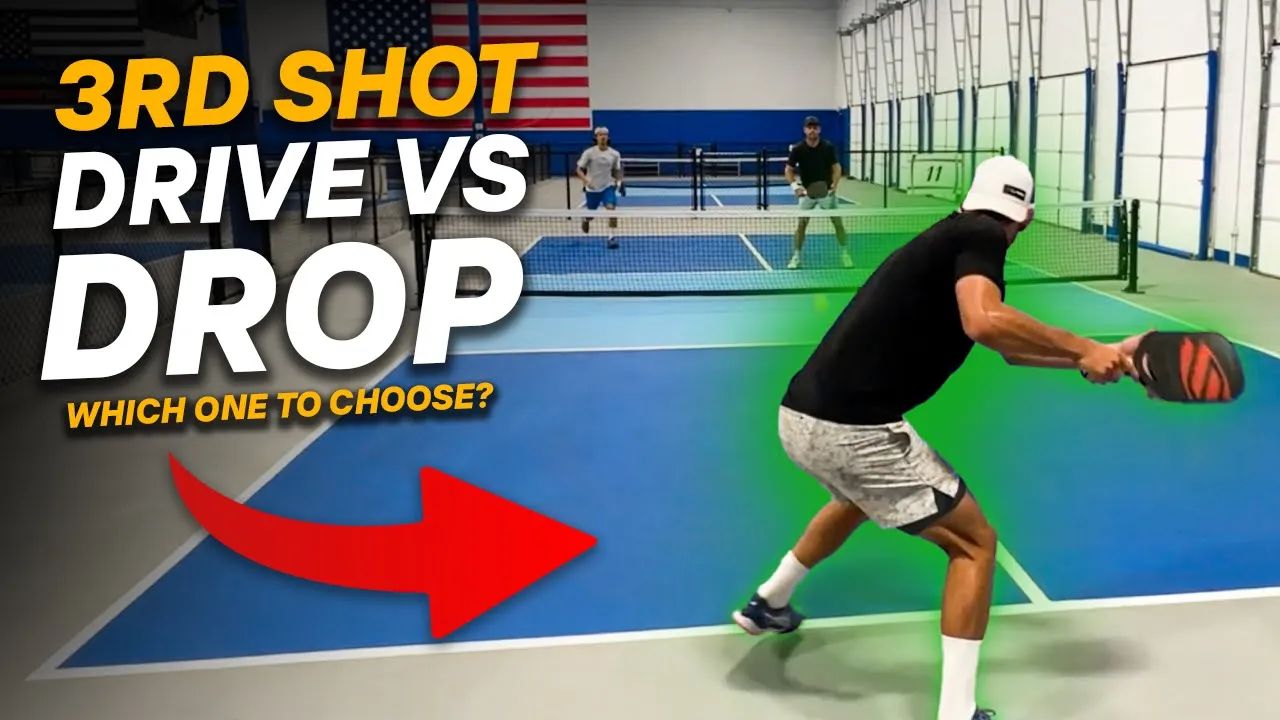
Some of what I tell you comes from my own experience, some of it I learn through coaching programmes but a lot of useful stuff can be found online.I'm attaching links to some of the videos I watched to help me prepare for the session - you might see some of the drills we used here. Please feel free to save or share if helpful.
Stay in Touch